The hardwood vs luxury vinyl question comes up in almost every flooring consultation we do. Both materials look fantastic in photos, both get recommended constantly online, and both can be the right choice depending entirely on how you actually live in your home.
I’ve installed and recommended both for years, and I can tell you the decision has less to do with which material is “better” and more to do with matching the flooring to your household. Let’s get into what actually separates these two options.
Hardwood vs Luxury Vinyl: The Core Differences
Before comparing them side by side, it helps to understand what each material actually is.
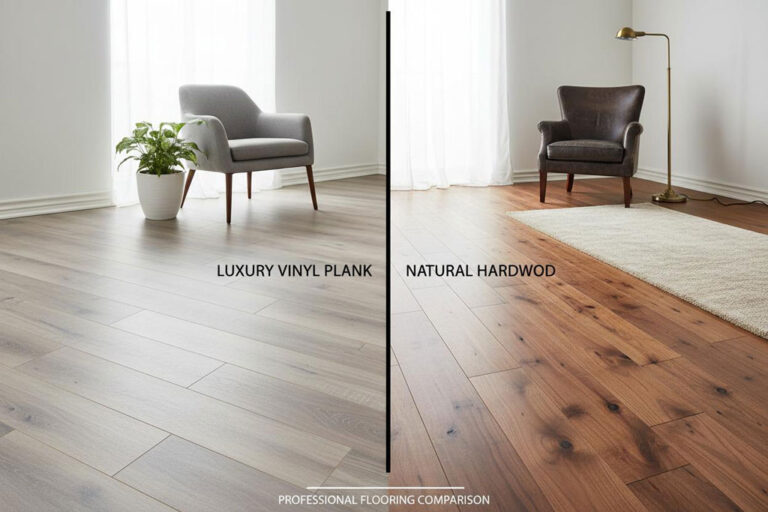
Hardwood is solid or engineered wood, milled from real trees, finished and installed as planks. It’s a natural material with natural variation, which is part of its appeal.
Luxury vinyl (often called LVP for plank or LVT for tile) is a synthetic material built in layers, with a printed design layer that mimics wood, stone, or tile, topped with a protective wear layer.
They can look remarkably similar from across the room, but they behave very differently under real-life conditions.
Durability and Everyday Wear
This is where the two materials really split.
Hardwood scratches more easily, especially with pets or heavy furniture. It also reacts to humidity, expanding and contracting with the seasons, which can lead to gaps or slight warping over time.
Luxury vinyl handles scratches, moisture, and temperature swings far better. It’s built specifically to resist the wear that stops a lot of hardwood floors from aging gracefully.
If you’ve got dogs with untrimmed nails, kids who drag toys across the floor, or a household that just sees a lot of daily traffic, luxury vinyl usually wins this category without much debate.
Comfort, Sound, and How Each Floor Feels to Live With
Durability isn’t the only thing that matters. How a floor feels day to day counts for a lot too.
Hardwood has a certain warmth and character that’s hard to fully replicate. It also tends to age with a kind of patina that some homeowners genuinely love, scuffs and all.
Luxury vinyl feels a bit more cushioned underfoot, which some people prefer, especially in kitchens where you’re standing for long stretches. It’s also generally quieter, since it doesn’t carry sound the way solid hardwood can.
Moisture and Climate Considerations
Moisture is one of the biggest deciding factors, and it’s often underestimated.
- Hardwood struggles in bathrooms, basements, and humid climates
- Luxury vinyl handles moisture well, making it a strong fit for kitchens, bathrooms, and below-grade spaces
- In coastal or humid regions, hardwood needs more careful acclimation and ongoing humidity control
If you live somewhere with real seasonal humidity swings, this alone can tip the decision toward luxury vinyl for at least part of the home.
Cost, Resale Value, and Long-Term Thinking
Hardwood generally costs more upfront, both for materials and installation. It also tends to hold a certain prestige with buyers, which can matter if resale value is a priority.
Luxury vinyl is more budget-friendly and has closed the visual gap significantly in the last several years. It won’t always carry the same resale premium as real hardwood, but it holds up better in the exact rooms where buyers actually check for wear.
A few cost factors worth weighing:
- Hardwood can be refinished multiple times, extending its lifespan significantly
- Luxury vinyl generally needs full replacement once it’s worn out, since it can’t be sanded down
- Installation costs vary, but hardwood labor is typically higher due to the skill required
Neither option is automatically the smarter financial choice. It depends on how long you plan to stay in the home and how the space gets used.
What We’ve Seen in Real Projects
Every flooring project teaches you something about how these materials actually perform once real life moves in.
We had a client insist on hardwood throughout their entire main floor, including the kitchen, despite two large dogs and three kids. Within eighteen months, the finish near the sink and back door was noticeably worn, with visible scratches from the dogs. A mixed approach, luxury vinyl in the high-traffic kitchen and hardwood in the quieter living room, would have held up far better.
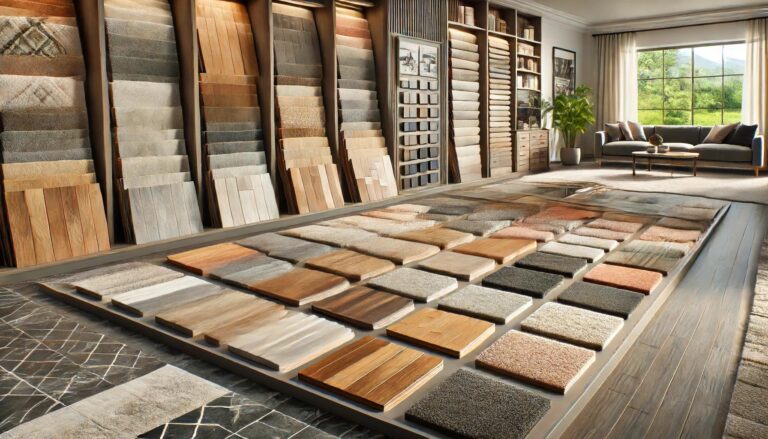
Another homeowner assumed all vinyl flooring would look obviously fake. After walking through a few new flooring samples in person, they were surprised at how realistic the higher-end luxury vinyl planks looked, with textured finishes that actually mimicked wood grain. Photos online rarely do it justice.
We’ve also seen hardwood installed too quickly without proper acclimation, especially in humid climates. One project had visible gapping between boards just months after installation, simply because the wood wasn’t given enough time to adjust to the home’s humidity before it went down. This is a completely avoidable mistake if the timeline allows for it.
A common misconception we hear constantly is that luxury vinyl is a “temporary” or “cheap” flooring. In reality, quality luxury vinyl can last fifteen to twenty years with proper care, which rivals many hardwood installations once you factor in refinishing needs.
These lessons are exactly why we walk clients through their actual daily routine before recommending a material, not just their style preferences.
Final Thoughts
There’s no universal winner in the hardwood vs luxury vinyl debate, and anyone who tells you otherwise is probably trying to sell you something. The right answer depends on your household, your climate, and how much wear your floors realistically need to handle.
Think honestly about how your home gets used, not how you wish it got used. The floor that fits your actual life will always outperform the one that just looked best in the showroom.