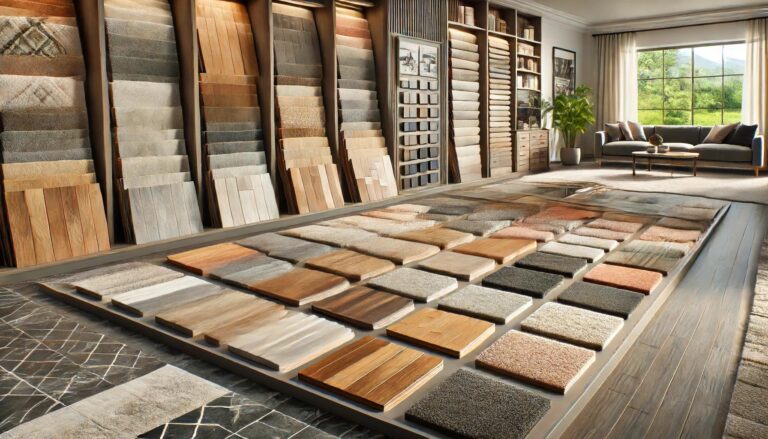
Choosing the right flooring is one of those decisions that feels simple until you’re standing in a showroom staring at forty samples that all start to look the same. It’s not just about color or style. It’s about how the material will hold up to your actual life, in your actual climate, in that specific room.
After years of helping homeowners work through this exact decision, I can tell you the people who end up happiest aren’t the ones who picked the trendiest option. They’re the ones who matched the material to the room’s real demands. Here’s how to think it through properly.
Choosing the Right Flooring Starts With the Room, Not the Trend
Every room has different needs, and that should drive the decision before style even enters the conversation.
Ask yourself:
- How much moisture does this space deal with (bathroom, kitchen, basement)?
- How much foot traffic passes through daily?
- Are there kids, pets, or heavy furniture involved?
- Does the room get direct sunlight that could fade certain materials?
Skipping these questions is how people end up with beautiful floors that don’t survive their first year.
Matching Material to Function
A material that’s perfect for a bedroom can be a poor fit for a mudroom. Softness and comfort matter in spaces where you’re barefoot. Durability and water resistance matter where messes happen.
- Bathrooms and laundry rooms: tile or waterproof vinyl, since moisture resistance isn’t optional here
- Kitchens: durable, water-resistant options that can handle spills and dropped pans
- Bedrooms: carpet or engineered wood for warmth and quiet underfoot
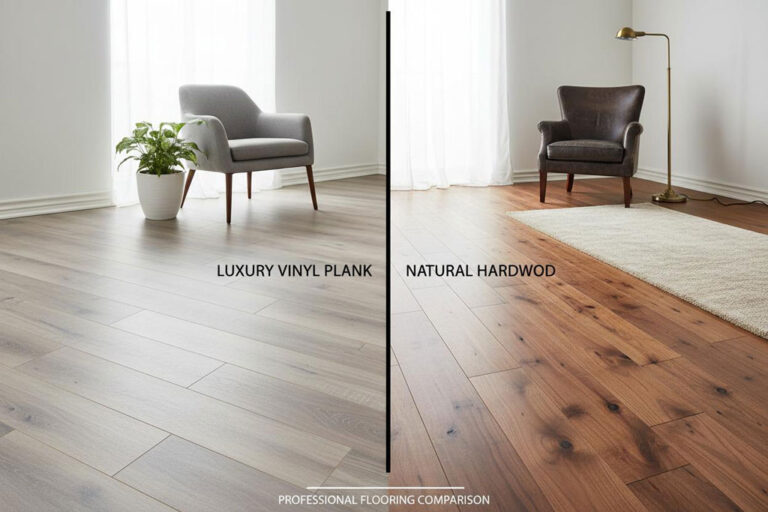
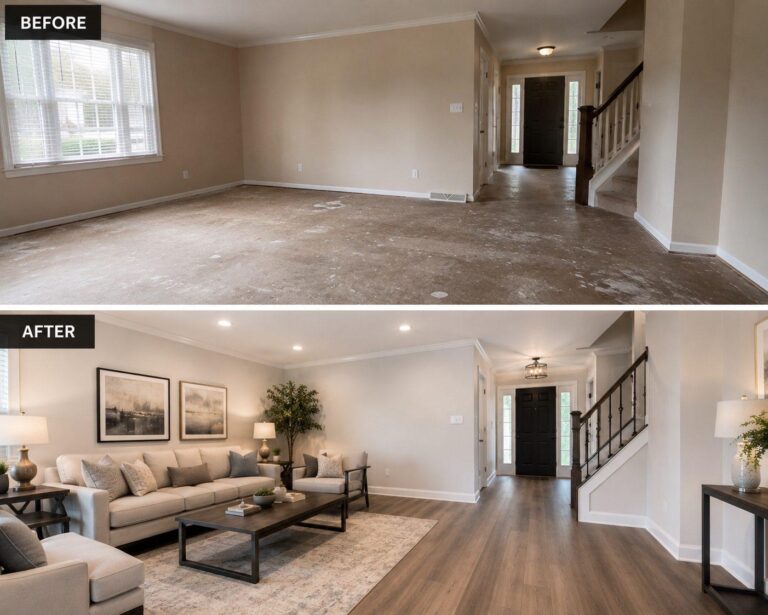
- Living areas: hardwood or luxury vinyl plank for a balance of looks and durability
Getting this match right is the difference between flooring that lasts fifteen years and flooring you’re replacing in three.
What New Flooring Really Costs You Beyond the Price Tag
When people compare new flooring options, they usually start with price per square foot. That’s only part of the picture.
Installation complexity, subfloor prep, and long-term maintenance all factor into the real cost. A cheaper material that needs frequent refinishing or replacement can end up costing more over time than a pricier option installed once and left alone.
The Maintenance Question Nobody Asks Early Enough
Before falling in love with a material, ask how much upkeep it actually needs. Hardwood needs refinishing every decade or so. Natural stone tile needs regular sealing. Some carpets show wear paths within a couple of years in high-traffic homes.
If maintenance isn’t something you want to think about often, lean toward options like luxury vinyl plank or porcelain tile, which hold up with minimal fuss.
What We’ve Seen in Real Projects
Flooring decisions look straightforward on paper, but real projects rarely go exactly as planned. A few patterns show up again and again.
Clients often choose based on a showroom sample, not their actual lighting. We had a homeowner pick a beautiful dark walnut floor under showroom lighting, only to find it looked almost black in their north-facing living room, which barely gets direct sun. Always bring a sample home and look at it in your own space, morning and night, before committing.
Waterproof doesn’t always mean moisture-proof. One client installed water-resistant laminate in a basement, assuming it could handle the occasional dampness. Water resistant and waterproof are not the same thing, and within a year the boards started warping near an exterior wall. Basements need fully waterproof materials, not just water-resistant ones.
People underestimate how loud hard flooring can be. A family replaced their upstairs carpet with hardwood for a cleaner look, then quickly realized every footstep echoed through the room below. If sound matters in your layout, ask about underlayment options or consider keeping softer flooring in upper-level bedrooms.
Skipping a professional opinion costs more than it saves. We’ve seen homeowners choose materials online without seeing them in person or getting guidance on suitability for their specific space. A quick consultation before ordering often catches issues that would otherwise show up mid-installation.
These are the kinds of details that don’t show up in a product brochure, but they matter just as much as the material itself.
Common Misconceptions Worth Clearing Up
A few myths come up often enough that they’re worth addressing directly:
- “All vinyl flooring looks cheap.” Modern luxury vinyl plank can be nearly indistinguishable from real wood, and it holds up better in wet areas.
- “Hardwood is always the best resale choice.” It’s popular, but the right choice depends on the room and local buyer expectations, not a blanket rule.
- “Thicker flooring always means better quality.” Thickness matters less than the core material and installation quality.
Final Thoughts
Choosing the right flooring isn’t about finding the trendiest option or the cheapest one. It’s about being honest with yourself about how a room actually gets used, then picking a material that can keep up.
Take your time, bring samples home, and don’t be afraid to ask questions that feel too detailed. The homeowners who love their floors years later are the ones who asked those questions before installation day, not after.