Almost every client conversation about home renovating starts with the same question: do I tackle the whole house or just fix the room that’s driving me crazy? There’s no universal right answer, but there is a right answer for your budget, your timeline, and your home’s actual condition.
After years of walking through homes and helping people plan renovations, I’ve learned that the size of the project matters less than how well it’s planned. A single room done right can transform how a house feels. A whole-home renovation done poorly can drain your savings and leave you with regrets. Let’s break down how to actually decide.
Home Renovating: The Two Paths and What They Really Mean
When people say “renovation,” they usually mean one of two very different projects.
Single-room renovation focuses your budget, time, and attention on one space, like a kitchen, bathroom, or living room. It’s contained, more predictable, and easier to live through.
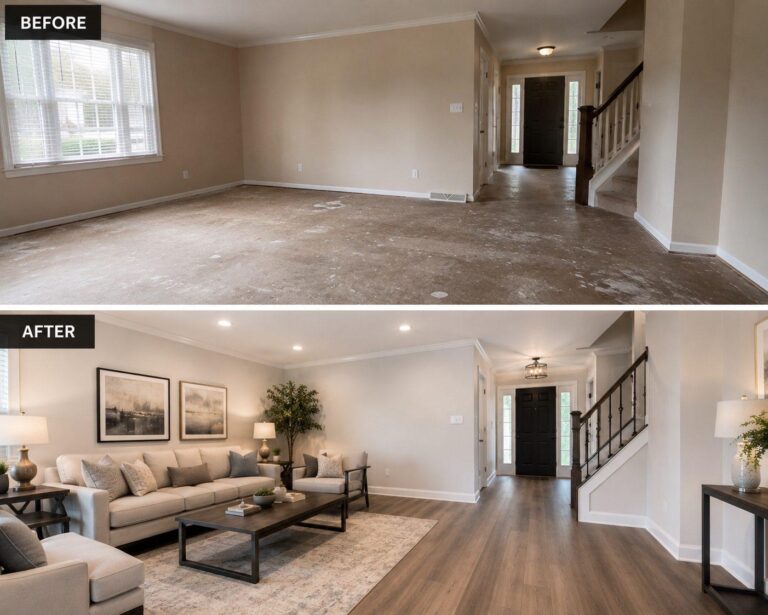
Whole-home renovation touches multiple rooms or systems at once. It’s bigger, more disruptive, and usually more expensive, but it can also solve problems that piecemeal fixes never quite reach.
Neither one is inherently better. The right choice depends on what’s actually going on with your house and your life.
When a Single Room Makes More Sense
If your budget is limited, or you’re not ready to move out during construction, focusing on one room is usually the smarter move. It lets you put real money into quality materials and skilled labor instead of spreading a smaller budget too thin across the whole house.
Single-room projects also make sense when:
- One space is clearly outdated or dysfunctional while the rest of the home is fine
- You want to test a contractor relationship before committing to something bigger
- You’re planning to sell in the next few years and want targeted upgrades that boost value
A kitchen remodel or a flooring update in the main living area often delivers the most noticeable, everyday impact for the money.
When the Whole Home Makes More Sense
Whole-home renovations make sense when problems are connected, not isolated. If your electrical system is outdated, your flooring is failing in multiple rooms, and your layout hasn’t worked for your family in years, patching one room at a time can actually cost more in the long run.
It also makes sense if:
- You’re renovating for resale and want consistency throughout the home
- Structural or system issues (plumbing, wiring, subfloor) run through multiple areas
- You’re already planning to be out of the house for a while, so it’s efficient to do everything at once
The tradeoff is real, though. Whole-home projects take longer, cost more upfront, and require a level of planning that a lot of homeowners underestimate.
Home Improvement Priorities That Guide the Decision
Whichever path you choose, the decision should follow your priorities, not just your Pinterest board. A few things worth ranking before you commit to either approach:
- Function first. Fix what doesn’t work before upgrading what just looks tired.
- Systems before surfaces. Plumbing, wiring, and subfloor issues should be addressed before new finishes go in.
- Resale versus lifestyle. A home you’re staying in for ten years should be renovated differently than one you’re planning to sell next year.
Getting these priorities straight before you call a contractor saves you from expensive changes mid-project.
Budget Reality Check
One of the biggest mistakes homeowners make is assuming a whole-home renovation costs proportionally more than a single room. In reality, it’s often less per square foot, because labor, permits, and material delivery get spread across a bigger job.
That said, a bigger project also means a bigger commitment, longer timeline, and more decisions to make along the way. It’s not just about the money. It’s about how much disruption you can handle at once.
What We’ve Seen in Real Projects
Every renovation teaches you something, and after enough of them, the patterns become obvious.
Homeowners often start with the wrong room. We had a client who wanted to redo their guest bathroom because it looked dated, while their kitchen flooring was cracked and lifting in three spots. Cosmetic problems get noticed first, but structural ones cause the real damage if they’re ignored.
Piecemeal renovations without a plan create mismatched homes. One family updated their living room flooring, then their kitchen a year later, then their hallway the year after that. Each choice made sense at the time, but the finishes never quite matched, and the home ended up feeling disjointed instead of upgraded.
Underestimating disruption is common with whole-home projects. A couple planning a full-home renovation assumed they could stay in the house the entire time. Two weeks in, dust, noise, and a shut-off kitchen made that plan unworkable. Planning temporary living arrangements upfront would have saved a lot of stress.
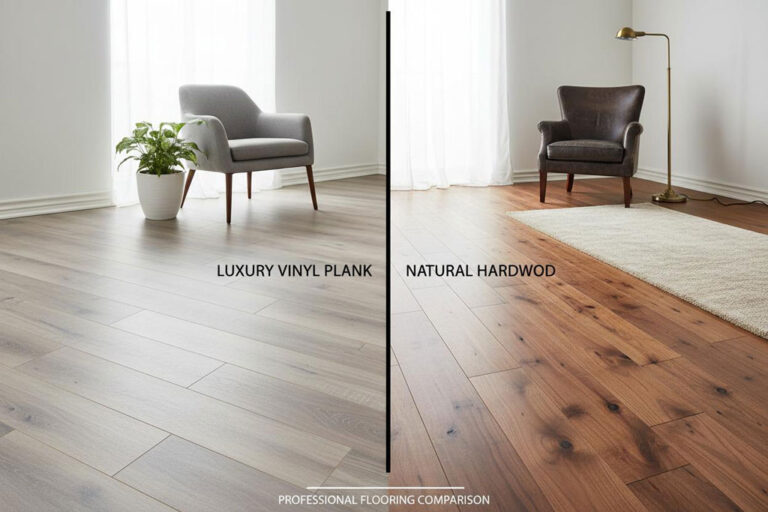
Flooring consultations early in the process prevent costly redos. We’ve walked into projects where flooring was chosen last, almost as an afterthought, and it clashed with cabinetry, trim, or wall colors already installed. A home flooring consultation early on, before other finishes are locked in, gives you a foundation that everything else can build around.
These lessons are why we always recommend starting with a real conversation about goals and budget before picking out materials. The plan matters more than the finish.
Practical Tips Before You Start
A few things worth doing regardless of which path you choose:
- Get a home flooring consultation early if flooring is part of the plan, since it affects so many other decisions
- Separate “must fix” issues from “want to upgrade” wishes before setting a budget
- Ask contractors how they handle unexpected issues, like discovering water damage mid-project
- Build in a buffer of at least ten percent for surprises, especially in older homes
- Think about how each room connects visually and functionally to the next
None of these steps take long, but skipping them is how a simple project turns into a stressful one.
Final Thoughts
There’s no prize for renovating your whole home if one room was all you actually needed. And there’s no shortcut that makes a whole-home renovation cheaper by doing it in disconnected pieces over five years.
The homeowners who end up happiest aren’t the ones who chose the biggest project or the smallest one. They’re the ones who took an honest look at their home, figured out what actually needed attention, and built a plan around that instead of guessing room by room.
If you’re standing at that decision point right now, unsure whether to start small or go big, that uncertainty is normal. Talk it through with someone who’s seen enough projects to tell you the truth about what your home actually needs, not just what would be nice to have.